Advocacy Connections

Published on November 12, 2011 by in Advocacy, Servicette 2011

0

The following is taken from the Fall 2011 Servicette

Mary Ann Dantuono, Advocacy Committee

“We should assist the poor in every way, and do it both by ourselves and by enlisting the help of others.”

—St. Vincent de Paul

In establishing the Systemic Change Commission of the Vincentian Family in 2005, the Very Rev. Gregory Gay, C.M., stated, “We are called upon to start actions, especially political actions, to eradicate the causes of poverty and unite in solidarity for justice in favor of the poor, because unjust systems created by selfish hearts have caused social, political and economic poverty.” This call to action has been taken seriously by the National Board of the Ladies of Charity USA. We began by studying the systemic change methodology in Seeds of Hope, in the publications of formation #11 and #12 and the materials that are available on FamVin.org. We began to develop ideas that could help LCUSA become more effective in responding to Fr. Gay’s call. One result of the Board’s study was the establishment of the Advocacy Committee of the Board in the spring of 2009.

We also participated in the Systemic Change Commission of the Vincentian Family’s convening of North America (US, Canada, Virgin Islands) that took place in November of 2010 in Belleville, IL. This meeting sought to introduce and/or deepen the understanding of the process of systemic change as a way of promoting on-going development of persons living in poverty and to equip leadership and trainers with the necessary tools (knowledge, convictions, and skills). It also began a process to develop regional strategies for continued training in systemic change and to provide opportunities for inter-Family exchange of experience and plans for future collaboration.

In many ways the meeting was a great success. As we shared our stories, we advanced in knowledge and deepened relationships with the various branches of the Vincentian family. From that convening many local meetings and trainings have taken place across North America.

On October 20-23, 2011, in Indianapolis, IN, the family will gather to continue this work. At “Vincentian Family Together Building Bridges Out of Poverty” both the leadership and members of the various branches can come together to pursue the opportunity to learn about the Ruby Payne and Philip De Vol methodology to end poverty in America. The theme promises great opportunities for our service to persons living in poverty. In addition to the goal of helping us to understand generational poverty, this meeting will also explore strategies for transforming local communities and continue to promote collaboration in the Vincentian Family.

We are challenged as members of the family to engage in a systemic change approach. What does that mean to us as the Ladies of Charity? We have been focusing on traveling the “Path of Caritas” with two feet: the foot of Charitable Works and the foot of Social Justice, an advocacy approach. As Vincent stated “Charity embraces Justice.” The Systemic Change approach also requires collaboration.

Collaboration is a 21st century model of organizational leadership. It stresses teamwork rather than competition. It begins with an assumption that each individual and organization has talents and skills to offer to the mission but no one individual or organization has it all. In this complex world we need to partner with others to effectively serve persons and communities living in poverty. In the current environment when needs are increasing and resources are diminishing, it offers us a direction of hope.

Collaboration encourages us to:

  • develop relationships to engage in the work of charity and justice;
  • learn the strengths and weaknesses of our partners including persons living in poverty;
  • plan and develop projects together;
  • pool our resources or work together to secure resources as partners for joint ventures and projects;
  • consider that who we work with is as important as what we do;
  • be open to new organizational structures where clearly defined and interrelated roles are possible and probable; and reflect together on our efforts so we can continually refocus ourselves on the 21st century mission of the followers of Vincent.

Collaboration was the style of both St. Vincent and St. Louise. They saw need and created opportunities for others to assist. Our own founding as the Confraternities of Charity is an example of how to engage and organize collaborators in the work of service for persons who suffer poverty, illness or oppression. As followers of Vincent and Louise, we must seek collaboration with the branches of the family and other groups who share our values to achieve the goals of alleviating the conditions of people living in poverty, of eradicating poverty, and changing the systems that perpetuate poverty in the 21st century. We will succeed if we believe sincerely as did Vincent and Louise, that more is accomplished jointly than can be accomplished individually. †


Continue Reading

0

The LCUSA’s Human Trafficking Resolution is now available under the Advocacy section of this website.

Click here to view/read.
Download PDF 

Continue Reading

1

By Jennifer Tazzi-Giovannetti, Esq

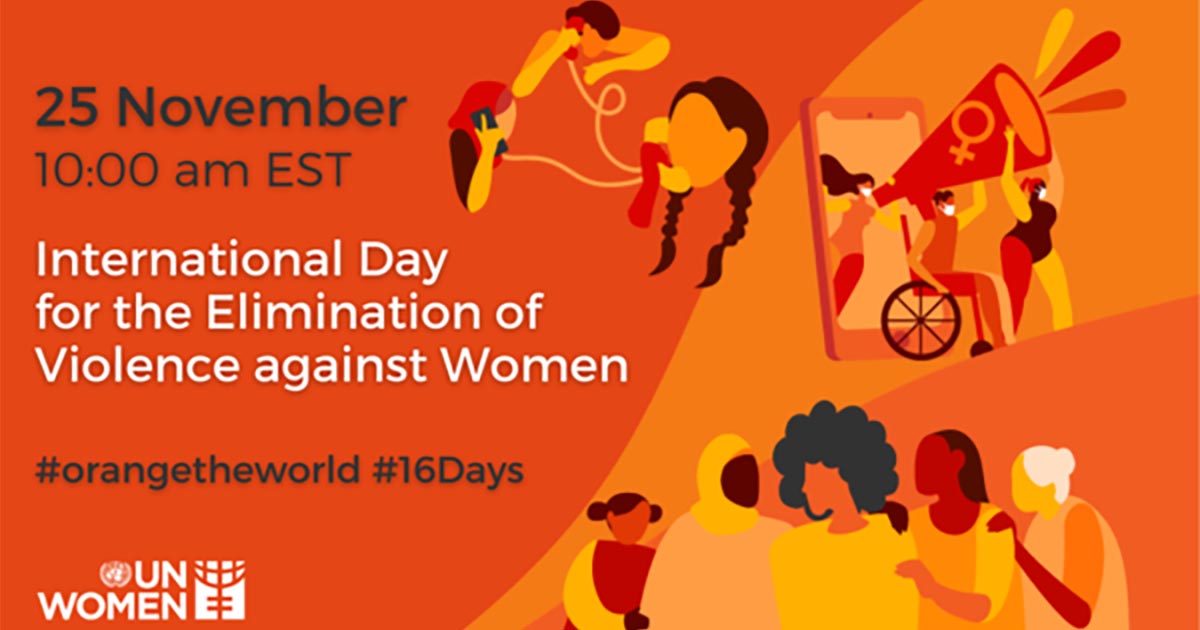
As Ladies of Charity USA, we know that women both in our country and throughout the world suffer from violence and exploitation. What should be our response to such suffering?

Violence against women is an issue that affects both men and women and is one that has local and global perspectives. It encompasses a wide range of abuses including: feticide, infanticide, domestic violence, hate crimes, honor killings and trafficking of women and girls domestically and internationally. It is an epidemic that affects women in every community, regardless of age, economic status, race, religion, nationality or educational background. Those in poverty are generally the ones most severely affected.

Internationally, it is estimated that one-third of women are victimized by violence at some point in their lives. Nationally, it is thought that a quarter of women will experience domestic violence in their lifetimes.

Violence against women is a systemic pattern of dominance and control. It can result in physical injury, psychological trauma and even death. The consequences of this violence can cross generations and last throughout the lifetimes of both perpetrators and victims.

The “Clothesline Project” at St. John’s University was just one recent example of how a Ladies of Charity can respond to the issue of violence against women.

The Clothesline Project is a national, grassroots project “bearing witness to violence against women.” A clothesline is hung with T-shirts decorated to honor a particular woman’s experience and to have it acknowledged in a public space. Events were held on campus from April 13th to the 16th to raise awareness of violence against women and girls and to reinforce a message of healing and the need for social justice.

While in recent years the Bishops of the United States have promoted many ways we can prevent the abuse of children, their statement of 1992, reissued in 2002 “When I Call for Help: A Pastoral Response to Domestic Violence” is a good starting point to consider how an Association can begin to address the comparable concern of gender based violence. In addition to explaining the pastoral approach, this resource also provides practical suggestions for action and resources for further information on the web, in film and in print. [http://www.usccb.org/laity/help.shtml.orig]

The Ladies of Charity USA hopes to become a voice to alleviate gender based violence in our homes, communities and the world. What can you do to help?

For more information or to get help go to www. http://www.ladiesofcharity.us/ and click on Advocacy.


RESOURCES

Websites

Center for the Prevention of Sexual and Domestic Violence: www.cpsdv.org

National Domestic Violence Hotline: www.ndvh.org

National Coalition Against Domestic Violence: www.ncadv.org

Family Violence Prevention Fund: www.endabuse.org

The Clothesline Project www.clotheslineproject.org/

Videos

When You Preach, Remember Me, United States Conference of Catholic Bishops, No. 680-8; phone ordering: 800-235-8722

Broken Vows: Religious Perspectives on Domestic Violence, Center for the Prevention of Sexual and Domestic Violence; phone: 206-634-1903; fax: 206-634-0115; e-mail: cpsdv@cpsdv.org

Wings Like a Dove: Healing for the Abused Christian Woman, Center for the Prevention of Sexual and Domestic Violence

Publications

Walk in the Light: A Pastoral Response to Child Sexual Abuse, United States Conference of Catholic Bishops, No. 5-000; phone ordering: 800-235-8722.; phone ordering: 800-235-8722.

On the Dignity and Vocation of Women (Mulieris Dignitatem), Pope John Paul II. Available on the Vatican’s website at www.vatican.va

The Gospel of Life, United States Conference of Catholic Bishops, No. 244-6; phone ordering: 800-235-8722.

Pope John Paul II on the Genius of Women, United States Conference of Catholic Bishops, No. 5-113.; phone ordering: 800-235-8722.

Catechism of the Catholic Church, United States Conference of Catholic Bishops, No. 511-9.; phone ordering: 800-235-8722.
Archdiocese of St. Paul and Minneapolis, Domestic Violence Committee of the Commission on Women

When You Are Called For Help: A Guide for Clergy on Responding to Domestic Violence Situations. Available from the Commission on Women, 328 W. Kellogg Blvd., St. Paul, MN 55102; phone:. 651-291-4495.

Bishop Ricardo Ramirez, CSB, Diocese of Las Cruces

Speaking the Unspeakable: A Pastoral Letter on Domestic Violence., Bishop Ricardo Ramirez, CSB. Available from the diocesesan Pastoral Center, 1280 Med Park Drive, Las Cruces, NM 88005; phone:. 505-523-7577;. www.dioceseoflascruces.org.

Keeping the Faith: Guidance for Christian Women Facing Abuse (San Francisco: HarperCollins, 1995).

 Rev. Marie M. Fortune & Rev. Al Miles

Domestic Violence: What Every Pastor Needs to Know (Minneapolis: Augsburg Fortress Press, 2000).

Woman-Battering (Minneapolis: Augsburg Fortress Press, 1994). Carol J. Adams

When I Call for Help: A Pastoral Response to Domestic Violence Against Women was developed by the Committee on Women in Society and in the Church and the Committee on Marriage and Family of the United States Conference of Catholic Bishops (USCCB), approved for publication by the Administrative Committee in September 1992, and affirmed by the full body of U.S. Catholic bishops at its November 1992 General Meeting. This revised tenth anniversary edition was approved by the full body of U.S. Catholic bishops at its November 2002 General Meeting and has been authorized for publication by the undersigned.
Msgr. William P. Fay
General Secretary, USCCB

Phone Numbers

- THE NATIONAL DOMESTIC VIOLENCE HOTLINE at 1-800-799-7233

- THE NATIONAL SEXUAL ASSAULT HOTLINE at 1-800-656-4673

- THE NATIONAL TEEN DATING ABUSE HOTLINE at 1-866-331-9474

Continue Reading